
The Asian Association of Hair Restoration Surgeons: Past, Present, and Future
The Asian Association of Hair Restoration Surgeons: Past, Present, and Future
Dr.Damkerng Pathomvanich MD. FACS, Dr. Pepon Chuenwiwatsakul MD, Dr Yue Xiao MD
Past: Laying the Foundations of AAHRS
Hair transplant surgery has deep roots in Asia – in fact, modern hair grafting techniques originated with Dr. Shoji Okuda’s experiments in Japan in 1939 (6). Yet for decades, Asian hair surgeons often had to travel abroad or learn in isolation to refine their craft. By the 2000s, the demand for hair restoration in Asia was booming – an ISHRS survey showed Asian countries saw 57,542 procedures in 2006, nearly triple the number from the year prior (6). However, organizing a region-wide meeting to address these growing needs was fraught with challenges. Geographic distances, language barriers, and the recognition that “Asian hair” differs significantly from Caucasian hair in both texture and growth patterns all made pan-Asian collaboration more difficult. Nonetheless, a movement began to take shape around the idea that a collective approach was necessary to advance and adapt specialized techniques for Asian patients.
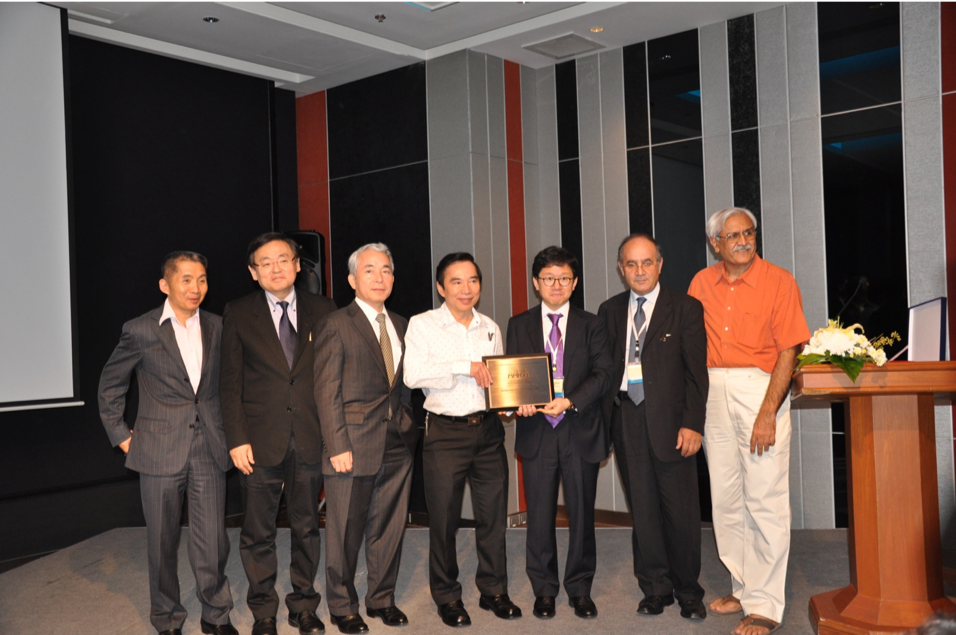
Figure 1. First BOG (Left to right: Dr Jerry Wong, Dr Kenichiro Imagawa, Dr Kuniyoshi Yagyu, Dr Damkerng Pathomvanich, Dr Tommy Hwang, Dr Golamali Abbassi, and Dr Sanjiv Vasa
It was against this backdrop that the Asian Association of Hair Restoration Surgeons (AAHRS) was born. In 2010, two renowned physicians – Dr. Damkerng Pathomvanich of Thailand and Dr. Sungjoo “Tommy” Hwang of South Korea – spearheaded the founding of AAHRS (4).
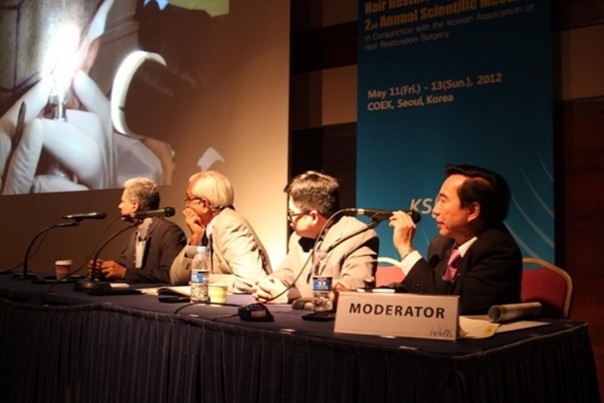
Figure 2. Dr. Damkerng Pathomvanich (far right), founding president of AAHRS, moderates a session at the 2nd AAHRS Annual Scientific Meeting in Seoul, May 2012 (held jointly with the Korean Association of Hair Restoration Surgery).
Dr. Pathomvanich, already a respected educator and innovator known for his donor “open technique” to reduce follicle injury, became the association’s first president (1). Dr. Hwang, a leading surgeon from Seoul, joined him as a co-founder, ensuring a truly pan-Asian leadership from the start (4). They assembled an inaugural Board of Governors reflecting the region’s diversity:
The primary purpose of the AAHRS was clear – to educate hair surgeons across Asia and raise the standards of practice in the region (4). By creating a regional forum, the founders hoped to make cutting-edge knowledge accessible to colleagues who might not easily attend international meetings. As Dr. Pathomvanich and peers noted, “Most of them will not have the means to attend the ISHRS meetings. Keeping the AAHRS meeting affordable will allow more people to attend” (4). This spirit of inclusivity and mentorship was woven into AAHRS’s fabric from day one.
The early years of AAHRS were marked by rapid growth and camaraderie. After an initial workshop in Bangkok in 2011, the 2nd Annual Meeting was held in May 2012 in Seoul, South Korea. There, AAHRS President Dr. Tommy Hwang teamed up with the Korean Society of Hair Restoration Surgery to host a vibrant conference. Surgeons from across Asia and beyond packed the halls, eager to share techniques in follicular unit extraction (FUE), discuss female alopecia, and even explore emerging topics like hair multiplication and the “baldness gene” (5).
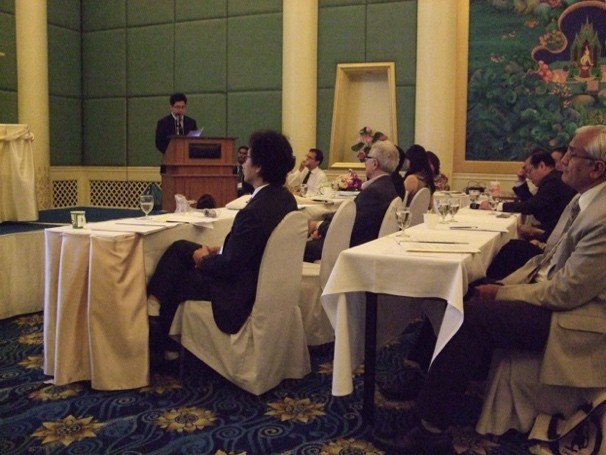
Figure 3. Attendees at the first AAHRS Annual Scientific Meeting in Bangkok (June 24–26, 2011)
International experts were invited as faculty – for example, U.S. surgeon Dr. Parsa Mohebi recounted the opportunity to lecture in Seoul alongside Asian colleagues (5). By the end of that meeting, it was evident that AAHRS had succeeded in creating a thriving community: a platform where a Thai and a Korean could co-moderate discussions, where an American could teach in Asia, and where hundreds of physicians from over 20 countries could learn from one another. The collaborative spirit ignited in those early gatherings – rooted in shared meals, live surgery demonstrations, and lively case discussions – established a warm “family” atmosphere that persists to this day. Notably, the leadership’s contributions were soon recognized globally. Dr. Pathomvanich himself earned the ISHRS Golden Follicle Award for outstanding clinical contributions to hair surgery in these years (1), underscoring how Asian surgeons were now helping shape the field worldwide, not just following it.
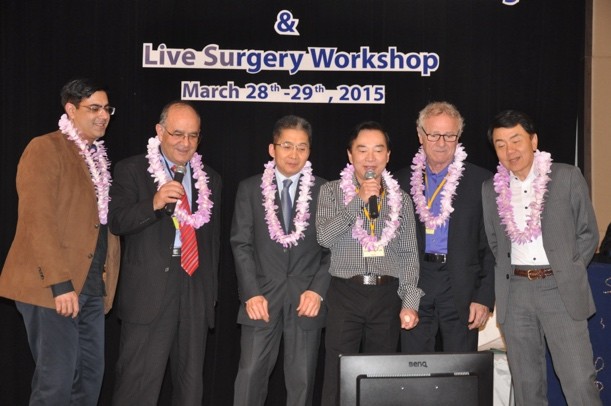
Figure 4. Karaoke during the Gala Dinner AAHRS 2015
Present: A Flourishing Pan-Asian Network
Today, the AAHRS stands as a vibrant professional network spanning the breadth of Asia. Its membership has grown to include hair restoration experts from East Asia, South Asia, the Middle East and beyond, all bonded by a shared mission to advance the art and science of hair transplantation. The current AAHRS Board of Governors reflects this diversity, including leaders from Thailand like Dr. Damkerng Pathomvanich (the founding president) and Dr. Chinmanat Lekhavat, while India contributes leaders such as Dr. Kapil Dua and Dr. Anil Garg. South Korea’s Dr. Jae-Hyun Park, Japan’s Dr. Akiko (a leading female hair surgeon), Pakistan’s Dr. Humayun Mohmand, Iran’s Dr. Ali Abbassi, China’s Dr. Zhang and Dr. William Wu, and Taiwan’s Dr. Alan Liu are among other prominent names guiding the association
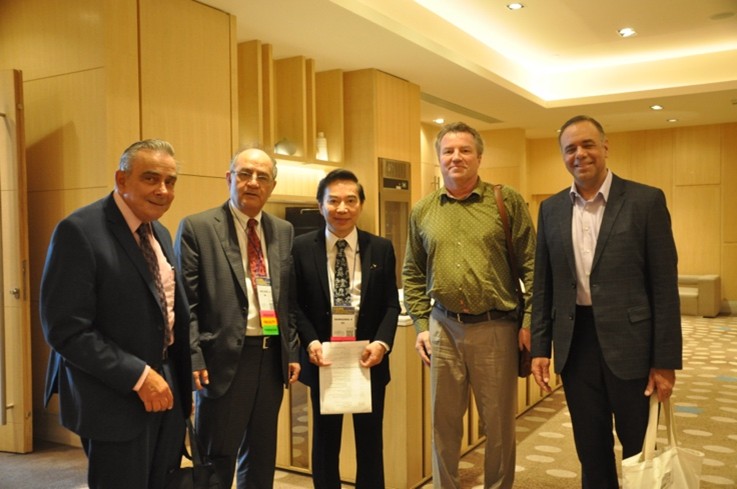
Figure 5. From left to right: Dr William Rassman, Dr Golamali Abbassi, Dr Damkerng Pathomvanich, Dr. Jean Devroye, and Dr James Harris
Many of the founding figures remain active mentors. For instance, Dr. Pathomvanich – now mentoring a new generation – served as Overall Chair of the 2023 AAHRS Annual Meeting in Bangkok, guiding scientific workshops and surgical courses. His continued presence, alongside fellow founders like Dr. Hwang and Dr. Imagawa who still serve on the board, ensures that the association retains its collective wisdom even as it welcomes fresh voices. At the same time, younger surgeons who were once trainees have come into their own as leaders. A testament to this generational progression is Dr. Bertram Ng of Hong Kong – a former fellow of Dr. Pathomvanich who now sits on the AAHRS Board and even hosted the latest meeting.
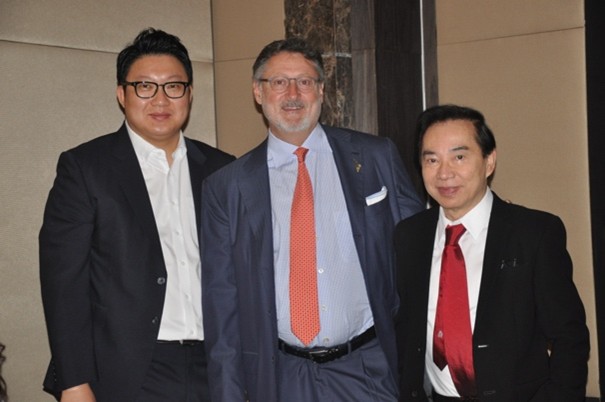
Figure 6. From left to right: Dr Jae Park, Dr John Cole and Dr Damkerng Pathomvanich.
The ethos is very much that of a collegial fraternity – senior experts and rising stars working side by side, bound by mutual respect and a passion for improving patient care. In its current form, AAHRS is widely recognized as the premier Asian forum for hair restoration surgery. The association organizes robust educational programs each year – including an annual scientific conference, hands-on workshops, live surgery demonstrations, and cadaver labs for anatomy practice (2). These events are deliberately rotated across different countries, often in partnership with national societies, underscoring AAHRS’s commitment to pan-Asian collaboration.
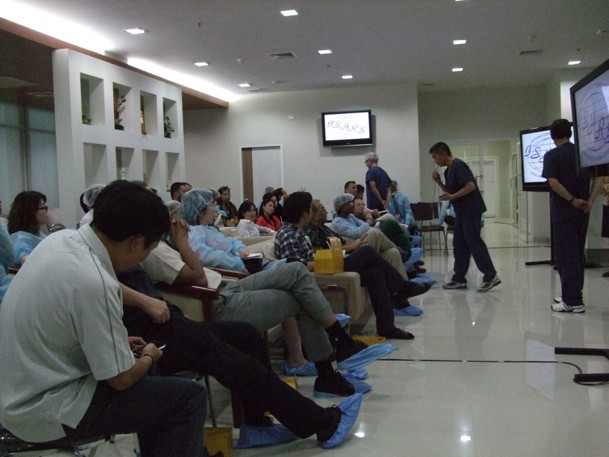
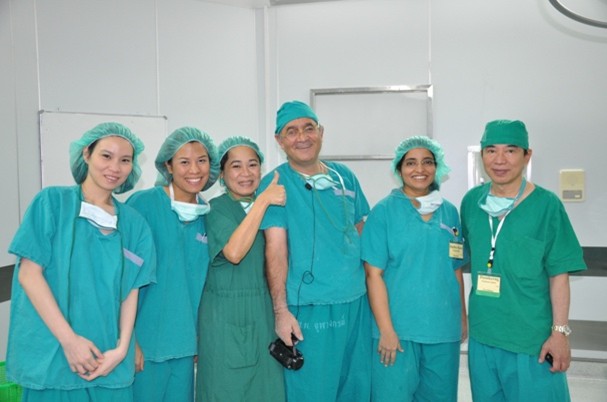
Figure 7. Participants at an AAHRS hands-on workshop observe a live hair transplantation procedure, reflecting the association’s emphasis on surgical training and teamwork
The content of AAHRS meetings today spans from basic techniques to the latest innovations. A typical conference will offer a basic video course for newcomers, alongside advanced sessions on topics like unshaven FUE, hairline design in Asian facial proportions, and complex repair surgeries. Live surgery workshops allow participants to observe master surgeons performing transplants in real time, fostering a rich mentoring environment. As described in a recent press release, the AAHRS provides a platform for surgeons “to exchange knowledge, refine skills, and collaborate on research to enhance patient care and outcomes” across Asia (3). This focus on education and skill-sharing has helped elevate standards of practice region-wide, just as the founders envisioned. Importantly, AAHRS emphasizes ethical, patient-centered practice in all training – echoing the standards set by its global parent body, the ISHRS, and reinforcing the principle that patient safety and natural results remain paramount.
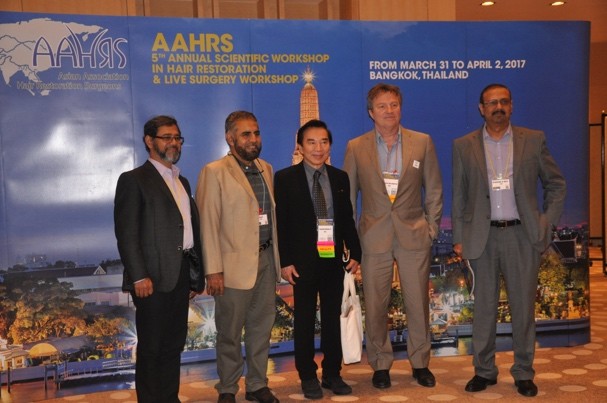
The accomplishments of AAHRS members in recent years highlight the group’s impact on the field. Asian surgeons affiliated with AAHRS have pioneered influential techniques and earned international accolades. To name a few examples: in 2017, Dr. Imagawa of Japan helped introduce novel concepts in donor hair management through AAHRS forums; in 2022, an AAHRS member from Korea received the ISHRS Platinum Follicle Award – one of the highest honors in hair surgery – for groundbreaking research on follicular regeneration (1). In the subsequent years, Dr. Ratchathorn Panchaprateep from Thailand and Dr Jae Park from Korea both received platinum follicle award.
Likewise, Indian colleagues have innovated in devices and protocols (such as suction-assisted follicle extraction tools developed by AAHRS faculty in India (1)). It is no coincidence that Dr. Kapil Dua of India, who co-founded AHRS India in 2008 and served as ISHRS President in 2022-23, has now taken on the presidency of AAHRS. His leadership symbolizes the increasingly global stature of Asian hair surgeons. “I am deeply honored to be appointed as President of AAHRS. I look forward to contributing to the growth and excellence of hair restoration surgery throughout Asia,” Dr. Dua said upon stepping into the role (3).
Future: Charting New Frontiers in Hair Restoration
Looking ahead, the AAHRS is poised to play an even greater role in shaping the future of hair transplantation – not only in Asia, but globally. The field of hair restoration is rapidly evolving, and AAHRS leaders are determined to keep their members at the forefront of these changes. In his vision for the coming years, Dr. Kapil Dua emphasizes advancing educational initiatives, fostering innovative surgical techniques, and enhancing collaboration among professionals across Asia (3). This will mean expanding training opportunities in new technologies – from robotic FUE systems to artificial intelligence–guided diagnostics – while ensuring younger surgeons receive the same kind of mentorship that defined the organization’s first decade.
There is also a drive to increase research output from Asia on emerging therapies. Notably, topics like stem cell therapy for hair regeneration and genomic medicine have been on the AAHRS agenda since early on. In the coming years, we can expect AAHRS to facilitate multi-center studies and clinical trials within Asia, tapping into the region’s vast patient population and genetic diversity to yield insights that benefit the entire world. The association’s collaborative ethos uniquely positions it to coordinate such projects across borders, uniting experts from Tokyo to New Delhi in pursuit of new cures for hair loss.
Crucially, AAHRS’s future will be guided by the same humanistic values that have characterized its journey so far. The next generation of AAHRS members – energetic, tech-savvy, and globally minded – are inheriting a culture of camaraderie and ethical practice. They are mentored by luminaries who instill the importance of putting patients first and sharing knowledge freely. The organization plans to continue its close partnerships with the ISHRS and other international bodies, ensuring that Asian perspectives have a voice in global guideline-setting and that Asian practitioners benefit from worldwide advancements. We may see more conjoint meetings like the previous 2024 summit in Hangzhou, China (the 8th Annual Meeting), which have brought together AAHRS with the Chinese and other hair surgery societies to exchange ideas on a global stage (3).
By fostering these East–West connections, AAHRS acts as a bridge between continents – adapting Western innovations to Asian contexts and exporting Asia’s unique innovations abroad. In reflecting on the AAHRS story, one is struck by the sense of family and shared purpose that pervades the organization. What began as a small group of visionaries in 2010 has blossomed into a regional movement that continues to thrive on mutual support and the joy of learning together. Each annual conference is like a reunion – senior doctors greeting former fellows, new members being welcomed over dinner, and everyone celebrating the artistry of restoring hair and confidence in patients. As hair transplant techniques continue to advance, the AAHRS remains steadfast in its commitment to collaboration, mentorship, innovation, and ethics. The association’s ongoing role in shaping the future is perhaps best summed up by Dr. Dua’s optimistic words: “We will continue to grow together and strive for excellence in hair restoration surgery throughout Asia” (3).
With this unwavering collaborative spirit, the AAHRS is not only securing the future of hair transplantation in Asia – it is helping to lead the global conversation, one shared discovery and one transplanted graft at a time. We are excited to have the next meeting from July 3 to 6th at Pullman Bangkok King Power.
References
1. Asian Association of Hair Restoration Surgeons. (2024a). 2024 conjoint meeting – speakers. https://aahrs-asia.com/index.php/speakers
2. Asian Association of Hair Restoration Surgeons. (2024b). 2024 scientific meeting, live surgery workshop & basic video course. https://aahrs-asia.com/
3. Business Standard. (2024, June 13). Dr Kapil Dua announced as president of the Asian Association of Hair Restoration Surgeons. https://www.business-standard.com/content/press-releases-ani/dr-kapil-dua-announced-as-president-of-the-asian-association-of-hair-restoration-surgeons-124061300393_1.html
4. International Society of Hair Restoration Surgery. (2014). Regional societies profiles: Asian Association of Hair Restoration Surgeons. Hair Transplant Forum International, 24(5), 191–193. https://www.ishrs-htforum.org/content/24/5/191
5. Mohebi, P. (2012, May 26). Hair transplant news from Asian Association of Hair Restoration Surgeons – AAHRS 2012. https://parsamohebi.com/hair-transplant-news-from-asian-association-of-hair-restoration-surgery-aahrs-2012/
6. Pathomvanich, D., & Imagawa, K. (2010). Hair restoration surgery in Asians. In W. R. Unger & R. Shapiro (Eds.), Hair Transplantation (5th ed., pp. 435–454). Informa Healthcare.